I Didn't Get the OpenClaw Hype — Then I Went to Clawstin
Why personal AI agents will become as ubiquitous as social media accounts
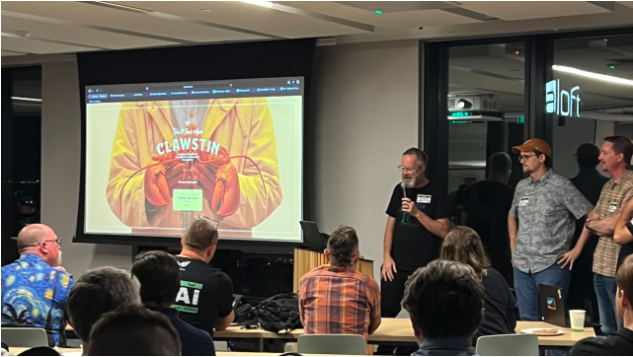
My big prediction: having a personal AI bot will become as ubiquitous as having an Instagram, TikTok, or Facebook account. Seriously. And not 10 years from now — adoption is going to be fast & furious as people understand the capabilities and incorporate it into their everyday life.
I arrived at that conviction after attending the first Clawstin event last week — a showcase and educational meetup focused on OpenClaw.
You may be familiar with OpenClaw's meteoric rise in popularity over the last few weeks, or have brushed it aside as another "AI hype" thing that doesn't deserve immediate attention.
Admittedly, I fell more into the latter bucket. I had a healthy curiosity and was hearing constant praise, but also some real skepticism — particularly around the security threats it may introduce. Best practice is to set it up on dedicated hardware and very strictly control what files and access it has.
But walking away from the event? Blown away.
For the uninitiated: OpenClaw is a free, open-source autonomous AI assistant (or "agent") that you install and run on your own computer, where it can actually perform tasks for you — not just chat. And as of Saturday, the project's creator Peter Steinberger announced he's joining OpenAI, with OpenClaw transitioning to an open-source foundation to ensure the project stays community-driven.
Here are some real-life takeaways from the event, and why I'm so excited about what's being built:
Practical
Claw to Claw — This was the first tool that made me go "OHH — I get it." Imagine showing up to a networking event or conference with dozens, even hundreds, of people chatting in small groups throughout the venue. Now imagine "checking in" your personal bot. (Side note: naming your bot is a seemingly universal rite of passage — I'm leaning toward Otto.) Your bot operates on your intent — it understands the kinds of connections you're trying to make. It meets every other bot there, then comes back with recommendations of who you should talk to in person.
Swats.AI — As people use their bots to complete more tasks, the bots will visit websites more frequently. Swats.AI builds a "brain" into a website so that when an agent visits, it can interact with the site's own agent. This enables a richer transfer of information — context, goals, intent. The immediate value is in qualifying leads, but I can see the broader potential. Humans may visit websites less frequently in the future and instead digest the summarization from their bot.
Useful
Everclaw.xyz — A set of tools to simplify setting up your OpenClaw bot.
Tree of Knowledge Obfuscation — One recommendation was to train your bot on the Tree of Knowledge use cases so it's less likely to be deceived by other bots. This opens up a whole new dimension to think about: your agent will interact with other agents, so how do you ensure it doesn't share private information or get manipulated?
Fun
RandomDailyApp.com — Fully autonomous — an agent builds and pushes a new game to production every single day.
Where I Want to Explore More
SmartAgent — Decentralized inference integrated with on-chain payments — it lets AI agents leverage decentralized inference and distribute compute across a peer network. It also layers into smart contracts. Your agent can make purchases on your behalf! It almost feels like Web 3.0 was built for this.
If you're even a little curious, now is the time to start paying attention — the personal AI agent wave is here, and it's moving fast.