Starting a Business: Failed Attempt One - NFTs
Vision
The metaverse is coming. It may not be in the next two years, but it inevitably will be here before we know it. VR headsets will enable interactions with anyone around the globe from the comfort of your home.
Diversity, equity, and inclusion will (hopefully) soar to new heights as contributors are no longer limited by their physical location. Anyone with a headset can join the conversation. "Meeting up" will shift from the physical to the virtual world, redefining what it means to "be in the office." Virtual offices will blend the benefits of in-person collaboration with the pros of WFH.
People will spend their off-hours in the metaverse connecting as well. Grandparents live far away? Slip on a headset; two minutes later, they can sit next to their grandchildren in a virtual world. Avatars will appear life-like and mimic facial expressions. The line of reality will blur as real connections develop in the virtual space.
In addition to pre-built virtual spaces, personalized custom spaces will rise in popularity as hanging out in the metaverse becomes a thing. Similar to adding personal touches to a home, virtual spaces will uniquely reflect the owner.
Hypothesis
Whether it's collecting watches, driving cars, or trading sports cards, people spend serious money on their hobbies.
As we transition to spending time in the metaverse, I hypothesize that people will want their physical items represented in that virtual space.
For instance, imagine owning a signed Tom Brady football. Having that item showcased in your virtual space, just like it might reside on your mantel, allows you to continue enjoying it while in VR land. Further, NFTs are the perfect vehicle for representing physical items in the virtual space due to their standardization and transferability.
Enter NFTY Memory
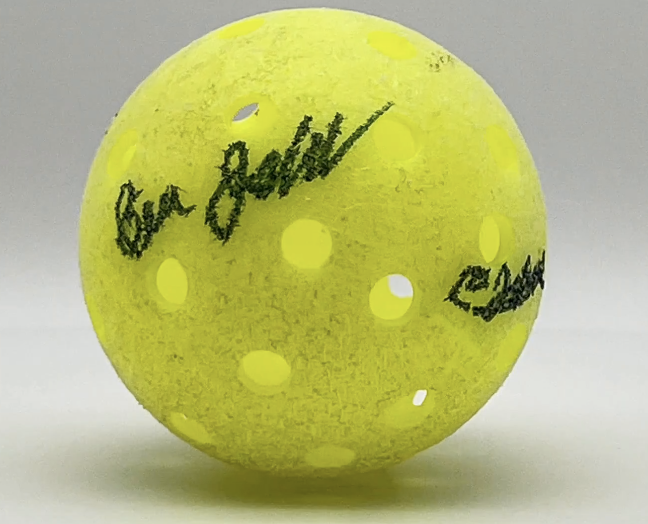
NFTY Memory is a service that turns customers' cool, unique, and collectible items into high-quality NFTs. In addition to standard 2D NFTs, which are perfect for flat things like sports cards and autographs, NFTY creates fully animated 360 NFTs. NFTY Memory helps non-creative users NFT their items to enjoy in the digital world.
Further, as the NFT marketplace expands, it could help customers make money by selling a copy of their NFT. If people are willing to spend $$$$ on a picture of a monkey, why wouldn't they want to spend $ on an animated NFT of a signed Tom Brady football?
Admittedly the idea jumped in on the NFT craze over the past 12 months but added the unique touch of incorporating real-life items into the space. Fast forward five months, I realized the world is not yet ready for NFTY Memory. However, I learned some valuable lessons along the way.
Key Learnings
1. 20k and 1k foot analyses are both important
What I did: Before diving into NFTY Memory, I analyzed the crypto industry wholistically. I researched and wrote about L1 chains and followed market news such as Meta testing NFTs on Instagram or the addition of NFT functionality to the exchanges Coinbase and Crypto.com. I also tracked NFT trade volume and top projects data to understand trends better.
Analyzing from the 20k foot view was encouraging and helped me envision where there might be room for NFTY Memory.
After launching the service, I doubled back and did a deep dive on the top NFT projects at the time. I read their white papers (if they existed), lingered in their Discords, and tracked their performance. Trekking through the trees of Doodles, Bapesclan, and Goblintown gave me a different perspective than my 20k foot analysis and helped me understand why NFTY Memory is too early.
That topic could be a post in and of itself, but ultimately it came down to the fact that NFTs today are still entirely too speculative. Most participants' sole goal is to make money. The tribal-like communities built around projects focused on hype to sell to the next person for more money did not readily translate to unique NFTs of real-world items.
My takeaway: Analyze from both a 20k and 1k foot view early on. Each analysis will yield different information for a more complete picture.
2. Know which question your experiment is answering
What I did: Market feedback is crucial to the launch of any product or service. To bootstrap market feedback and get actual data on whether people wanted the NFTY Memory service, I decided to run a sold-out experiment (SOE).
There are a few variations, but the main idea is to gather purchase intent data from the marketplace; capturing the contact info of would-be customers is a bonus. It's important because it validates that someone is willing to purchase your offering and creates a potential dialogue with customers (super valuable!).
While preparing to run the SOE, I realized I hadn't yet incorporated a process flow for customers to 'buy' or a form to fill out expressing interest. Considering my minimal resources as a solopreneur, I decided early data was still good and ran the experiment, even without having all the pieces in place.
I didn't realize it then, but I inadvertently changed the experiment with that action. The SOE output no longer answered how many people wanted to buy my service but how many people clicked on the ad and landed on the website.
I further exasperated the mistake by loosely interpreting that data, website traffic, as purchase intent! As an ever-optimistic solopreneur with initial data, I pushed forward with development.
My takeaways: Clearly define the question getting answered before running an experiment. Then design the experiment so that the output answers that very question. Revisit the original question if changes are made.
My second takeaway is a refresher on data interpretation. It's important sometimes to take a step back to review and understand what the data is saying rather than molding it to fit a pre-conceived view.
3. Be intellectually honest with yourself and listen!
What I did: Businesses exist because they solve problems. Often they only solve one problem but do it very well. I've always taken this ethos to heart, and when building NFTY Memory frequently asked myself, "what problem am I solving?" and "how am I adding value?"
And my brain came up with answers! Helping non-creative people get into the NFT space, creating unique 360 NFTs, or the potential to help customers make money were all reasonable responses.
But when I really questioned myself and listened to what my gut said, I got a different response from what my brain reported. I realized I wasn't solving a pain point but creating one. I also couldn't help customers make money because the market wasn't ready, and finally, after minting the NFT, there wasn't enough value or things to do with it today.
My takeaway: Keep asking hard questions and listening. How long does it take to answer those questions? Is it adding value, or do you think it's adding value? Are the answers somewhat weak, or do you believe in them wholeheartedly? The quicker you get to those truths the more time you'll save.
And if you don't know? Get started on the journey and circle back along the way. The answers will reveal themselves if you listen.
Skills Strengthened and/or Learned
It was super rewarding to bring NFTY Memory to fruition, especially since I covered many different areas - from financial modeling to website development. I tackled projects such as:
- Financial modeling - Built planning tool, advertising, operational / COGS / FTE
- Sold out experiment - How to run, what makes it successful
- Website development - Webflow (note: avoid templates! Creating your own classes/elements to reuse throughout the project is easier), ecommerce store, product/service offering, conditional visibility, billing, taxes
- Design - All pages (Home, Product, FAQ, Checkout, etc.), pixel perfect polish, color schemes & content
- Advertising & Analytics - Meta Ads, Google Tag Manager
- Creative - Copywriting, branding & logo design, Blender video sequencing, turntable animation, photography, Adobe Photoshop
- Legal - Open Access / Public domain, first sale doctrine, LLC incorporation
Overall, I still believe that the vision and hypothesis are correct. Timing? I was a bit off. The NFT space and metaverse need to mature, speculation die down, and more use cases emerge before the service can deliver value.