TLDR
Built with a Laravel template and rule-based task generation for Texas-specific estate settlement requirements. Primarily a technical learning project. The key insight: find customers first—do it manually with real users before building software.
The Problem
A close friend's grandmother passed away, and her uncle was named executor of the estate. What followed was months of confusion—filing paperwork with courts, tracking down accounts, notifying government agencies, managing deadlines. The uncle was overwhelmed, constantly unsure what to do next or whether he'd missed something critical.
Estate settlement is a problem that catches people off guard. You're grieving, and suddenly you're responsible for navigating a complex legal process you've never encountered before. Miss a deadline? There are real consequences.
Existing tools in this space are essentially glorified task management apps. They give you a checklist, but they don't tell you which tasks apply to your specific situation or when things need to happen. The research burden stays on you.
The Bet
What if an app could do the research for you? Instead of a generic checklist, ask a few questions about the estate—what assets existed, what the family situation looks like, what's already been done—and generate a personalized roadmap with every task you need to complete, in the order you need to complete them.
The hypothesis: executors don't need another task manager. They need a co-pilot—something that automates the research, tells them exactly what to do, and guides them through each step. If that can turn a 500+ hour process into a manageable workflow, that's genuinely valuable.
I validated the idea by talking to people who had recently settled estates—friends of friends, people in Facebook groups, Reddit communities. The pain was consistent: overwhelm, uncertainty, fear of making mistakes. Existing solutions weren't solving it.
Why Texas First
Probate law varies by state. Rather than building something generic that works poorly everywhere, I focused on Texas—one of the top states for deaths per year, with its own specific court systems and requirements. Going deep on one state lets me build something that actually works.
Building It
A frictionless onboarding that immediately demonstrates value is critical for hooking users early. If I could ask the right questions upfront and instantly show a personalized task list, users would understand what they're getting before committing to anything.
The Onboarding Flow
I designed a 4-step survey that captures enough information to generate a useful starting point:
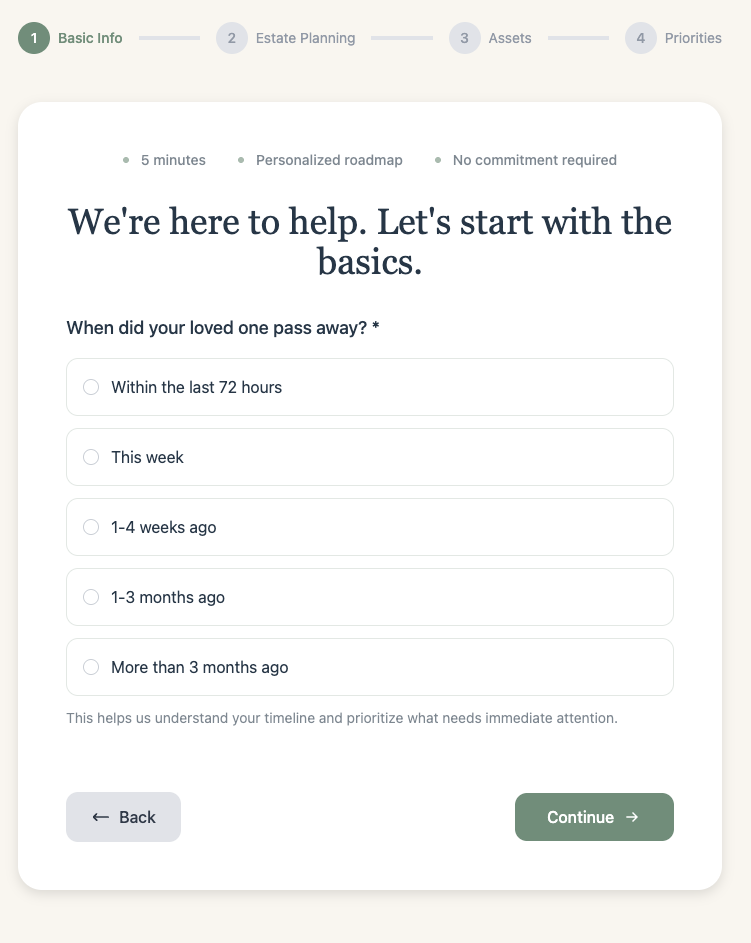
Timeline matters. Someone who passed 72 hours ago has different urgent tasks than someone who passed 3 months ago.
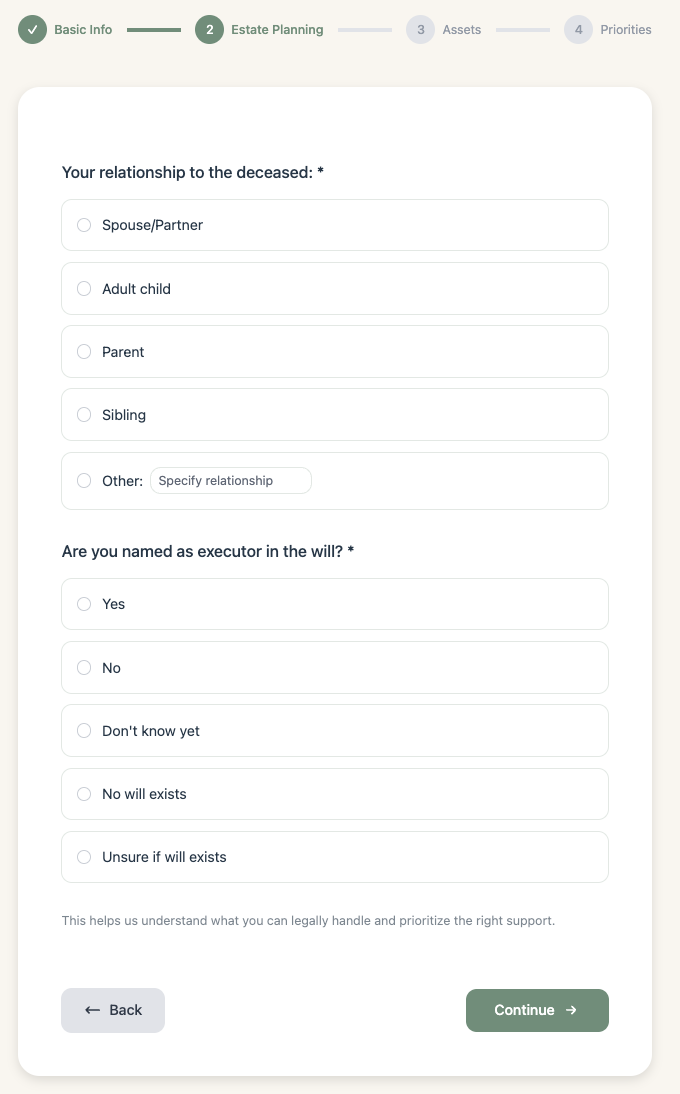
Relationship to the deceased and executor status determine legal authority and which forms apply.
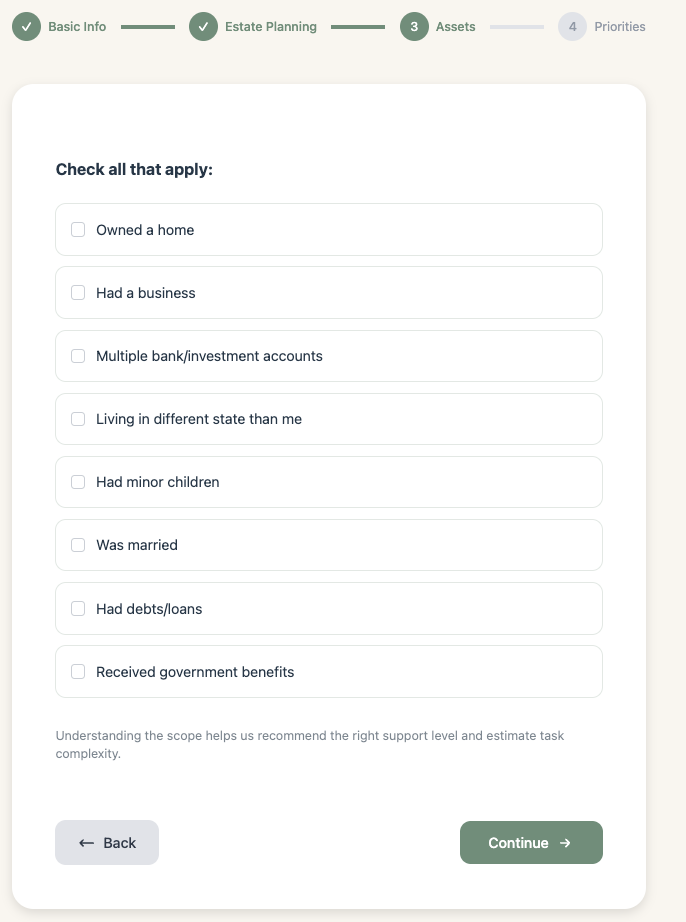
Real estate, businesses, accounts, debts—each triggers different tasks and timelines.
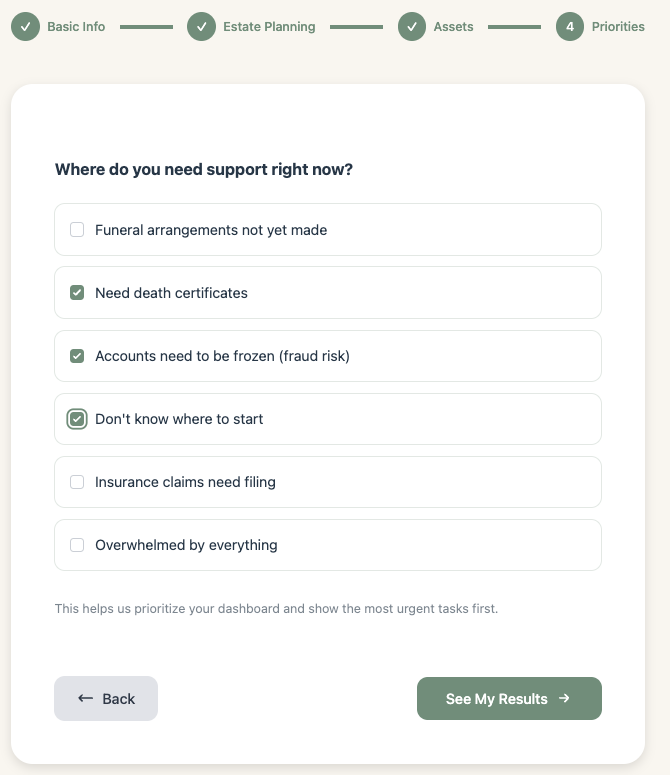
Understanding immediate needs lets us surface the most urgent tasks first.
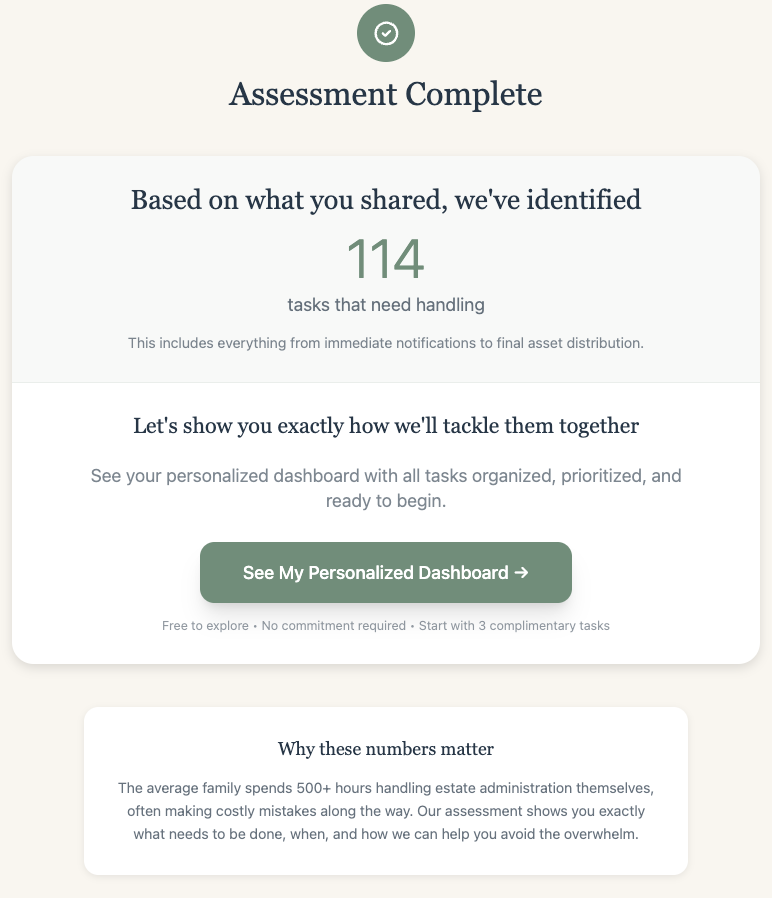
The result: a personalized dashboard showing exactly what needs to happen, organized by urgency. In the example above, the system identified 114 tasks specific to that estate—from ordering death certificates to closing digital accounts.
Technical Decisions
Logic-Based Task Generation
The task generation is currently rule-based, not AI-powered. Each answer in the onboarding flow triggers specific tasks from a master database. If they owned a home in Texas, add property transfer tasks. If they had a business, add business succession tasks. If they received government benefits, add notification requirements.
This approach is deterministic and predictable—critical when you're giving people legal guidance. Every task has been researched and validated for Texas probate requirements.
Tech Stack
Laravel PHP for the backend (started from a template to move fast), Postgres hosted on Railway for the database. The frontend is server-rendered with minimal JavaScript—this isn't an app that needs real-time updates or complex client-side state.
I chose Laravel because I had access to a solid template and wanted to prioritize speed to market over technical elegance. For a pilot, getting something in front of users matters more than having the perfect stack.
Task Organization
Tasks are organized by urgency: Immediate (0-72 hours), Week 1, Week 2-4, Month 2-3, and so on. Each task includes estimated time, category tags (Government, Financial, Legal, etc.), and step-by-step instructions when available.
The Dashboard
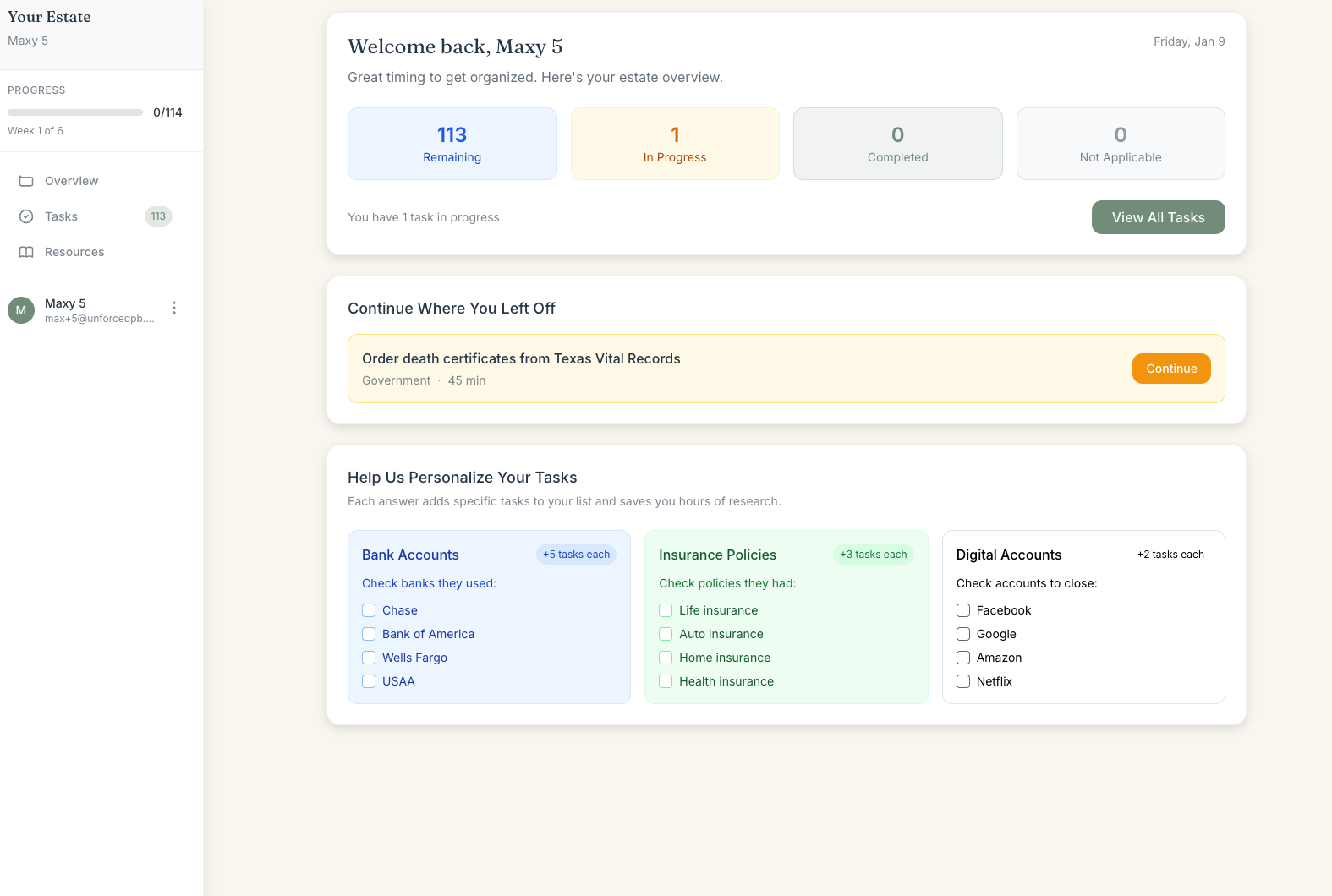
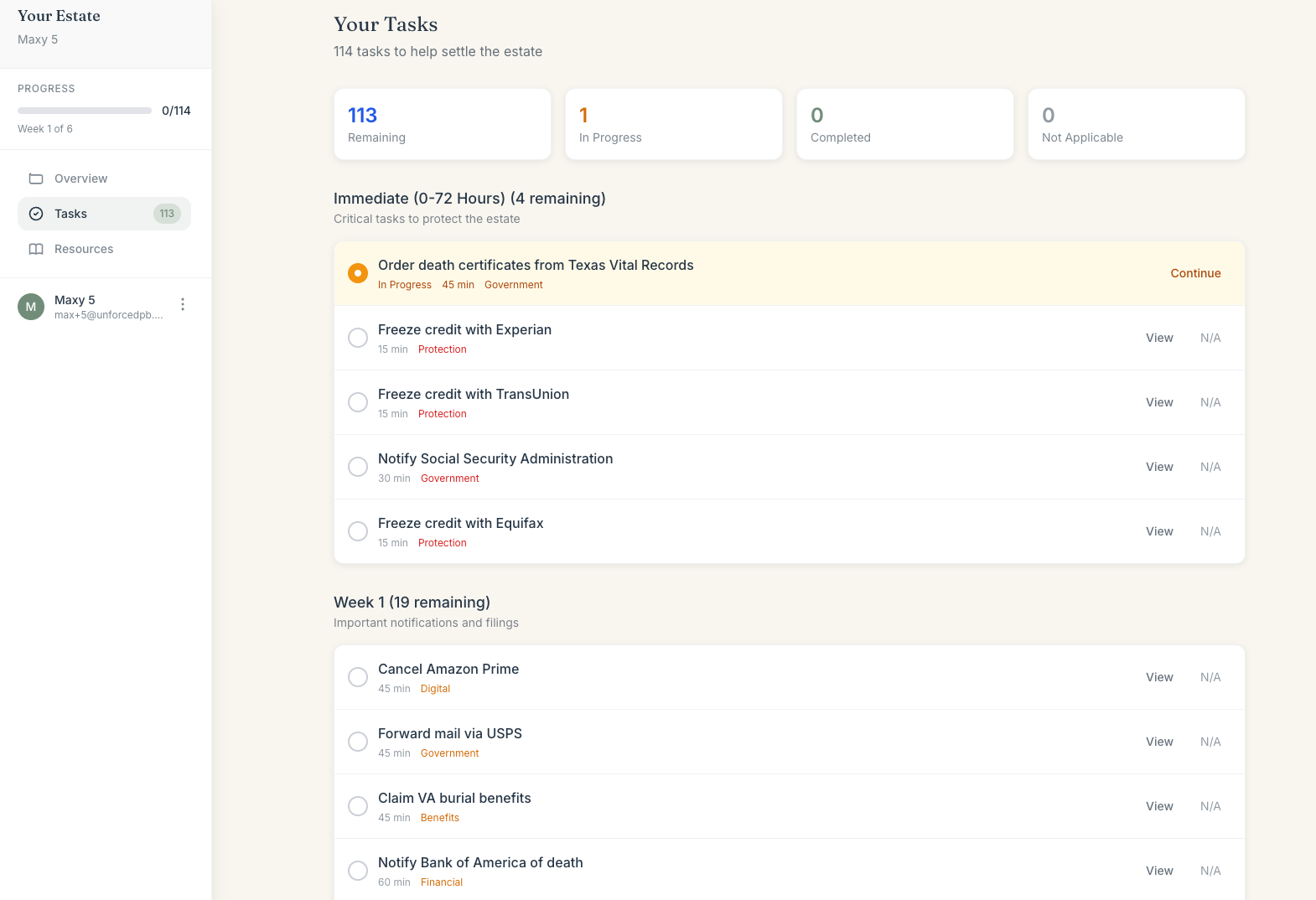
After completing onboarding, users land on a dashboard that shows their progress and surfaces the next most important task. The task list breaks everything down by timeframe, with the ability to mark tasks complete, mark them as not applicable, or dive into details.
The "Help Us Personalize Your Tasks" section lets users continue refining their task list—checking off which banks, insurance policies, and digital accounts apply adds or removes specific tasks.
Current Status
EstateMate is in pilot phase. The core product works—onboarding, task generation, dashboard—but I haven't pushed hard on user acquisition. Momentum has slowed as I've focused on other projects.
What's Next
The roadmap includes AI-powered features: document analysis to extract relevant information from wills and court filings, intelligent task recommendations based on similar estates, and eventually guided form completion. But the foundation had to be right first—accurate task generation based on Texas-specific requirements.
What I've Learned
Distribution and discoverability are the real challenges. Estate settlement is a "when you need it, you really need it" problem—people aren't searching for this solution until they're in the middle of a crisis. You can't build demand; you have to be there when demand appears. That requires a fundamentally different go-to-market strategy than most products.
The other lesson: building for a crisis moment means your users are stressed, overwhelmed, and time-constrained. Every friction point matters more. The product has to work immediately, explain itself clearly, and earn trust fast—because users don't have bandwidth to figure things out.